

BY CAITLIN SMITH
Are women in prison treated fairly?
When we think of prisons, we usually think of men locked down on crowded corridors. It’s rare that we consider the females who are incarcerated. In England and Wales alone, over 3,000 women are currently behind bars. But should they be? Many women around the UK are currently incarcerated however, after looking at stats, it seems many of these women need more help rather than being thrown into a cell for months or even years on end. According to the Ministry of Justice Government website women prisoners only make up 4% of the UK prison population, but that still equates to more than 3,000 women prisoners in England and Wales. Since pre-Covid (2019) the female prison population has decreased by 13% (from 3,832 to 3,315 prisoners).
The NHS say they have acknowledged that “Women in prison have disproportionately higher levels of health and social care needs than their male counterparts in prison” and “Women can sometimes be overlooked in a majority male estate.” However, they are adamant they are “Committed to improving health and social care outcomes for all women in prison and upon their release, reduce inequalities and ensure equity of access to the full range of health and social care services for all women across the women’s estate.” ‘Oxjournal’, which publishes articles written by school pupils under academic supervision states that “before 2019 prisons around the world refuse to provide essential services catered to their needs, such as sanitary pads during monthly menstrual cycles.”
Lilly couldn’t believe that, in 2018, these women were being held in a prison – they should be somewhere they could get help, she thought
What happens to women who give birth in prison? A Mother and Baby Unit (MBU) is a designated separate accommodation unit within a women’s prison which enables mothers, where appropriate, to have their children with them. Women who are pregnant or who have children under the age of 18 months can apply for a place in an MBU. There are currently 6 MBUs in operation across the women’s prison estate in England and Wales which provide an overall total capacity of 64 places for mothers. The concept or Mother and Baby units is strange and often debatable.
When we first hear this, we ask ourselves, “should we be putting babies in prison?”. However, it also poses the question, “could this be better for the child’s future?”. As we know, children usually rely on their mothers in their first stage of life, for things as simple as feeding, so many may argue that whether the mother is in prison or not, it is crucial for mother and child to be together for the first stage of life. Family outside of the prison may also not be as supportive and/or the child has no present father figure.
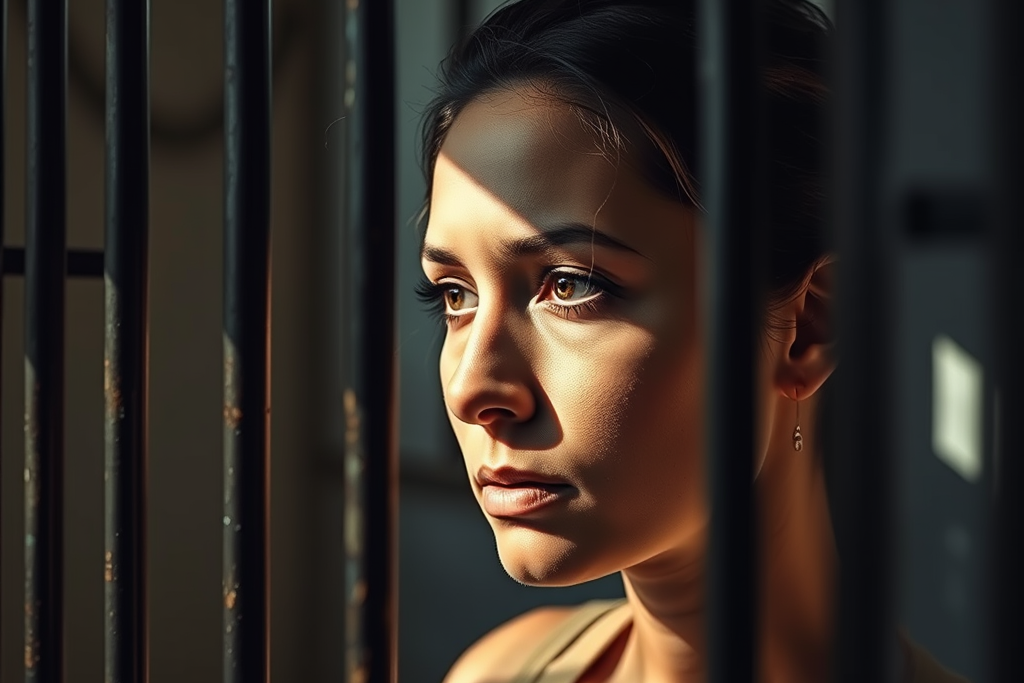
In a BBC News article, a former inmate, Lilly, gave her first-hand experience. She explained that “some inmates were clearly mentally ill. One tugged and twirled at her hair so much that it looked as though it was in dreadlocks, interspersed with bald patches. Another sucked on her pillowcase and spoke in a baby language.
Lilly couldn’t believe that, in 2018, these women were being held in a prison – they should be somewhere they could get help, she thought.” and although these women clearly needed more than to serve their time in prison “There’s no rehabilitation for those prisoners whatsoever – there’s no point doing anything because they’re not there long enough,”. With holidays coming up these women were not offered extra support without having their family and friends around and “On New Year’s Eve she heard an ambulance approaching the prison at 8:30pm to deal with the first suicide attempt of the evening. Throughout the rest of the night, Lilly listened as the sirens blared again and again.”
“There’s no rehabilitation for those prisoners whatsoever”
This is increasingly common according to the campaign group Women in Prison, the rate of self-harm is nearly eight times higher in women’s prisons than in men’s prisons. Nicola Drinkwater, Director of External Affairs and Campaigns for the organisation, says “The rates of self-harm amongst women in prison are deeply concerning to read.
“While over recent months the Government has made significant, promising announcements on women’s justice which recognise that women do not belong in prison, we must not overlook the severe mental health impacts prison is having on women currently serving custodial sentences.”
“Women facing serious health challenges are ending up in prison when what they truly need is medical or psychiatric care. Prisons are not keeping women safe. They are often re-traumatising women and can even bring about mental health issues that weren’t previously there.”
“Rather than punishing women for their experiences, we need to prioritise prevention and ensure they have access to the support they need in their communities. We hope the Women’s Justice Board will bring about this change.”
“Prisons are not keeping women safe.”
There are currently many charities to support women in the UK justice system such as “Women in Prison”. They aim to work collaboratively in the community, custody and in prisons with women and girls facing structural inequalities through programmes and campaigns that challenge and change oppressive systems. Are resilient and driven as transformational change must and can happen for women who are facing criminalisation.
The NHS, “The National Women’s Prisons Health and Social Care Review was established in 2021, driven by a commitment to improve health and social care outcomes for all women in prison and upon their release”. They aim to improve health and social care outcomes for all women in prison and upon their release, reduce inequalities and ensure equity of access to the full range of health and social care services for all women across the women’s estate.
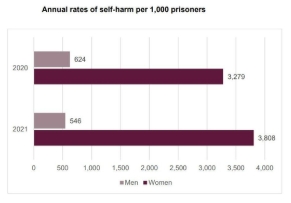
Statistics suggest female prisoners are far more likely to self-harm than male prisoners
Source: HM Inspectorate of Prisons, 2022
Clearly, more needs to be done for women in prison. Prison shouldn’t be a dumping ground for women suffering from serious mental health issues. For those who are there for crime, rehabilitation, alongside punishment is important. In a society where women are routinely treated as second class citizens, it is a shame that this is continued in prison.

 Neon Nottingham